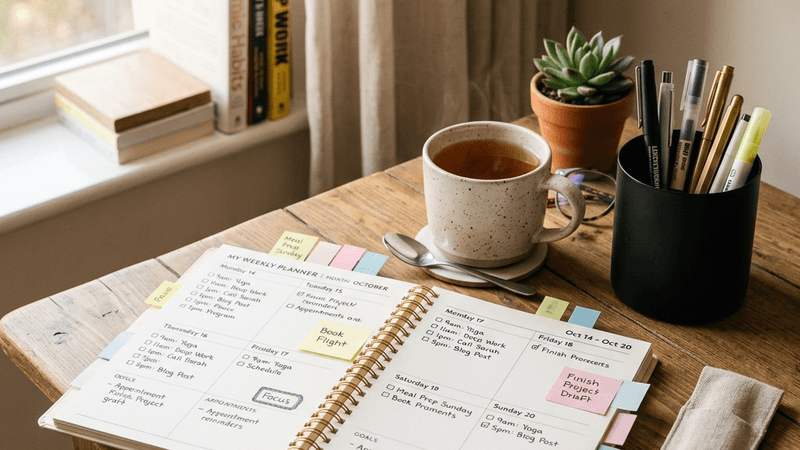
Here's what actually moves the needle — not theory, not guru advice, but tested reality.
Everyone's Weekend Planning journey looks different, and that is exactly how it should be. The principles are universal, but the application needs to be personalized to your life, goals, and constraints.
The Emotional Side Nobody Discusses
One pattern I've noticed with Weekend Planning is that the people who make the most progress tend to be systems thinkers, not goal setters. Goals tell you where you want to go. Systems tell you how you'll get there. The person who builds a sustainable daily system around cognitive bias will consistently outperform the person chasing a specific outcome.
Here's why: goals create a binary success/failure dynamic. Either you hit the target or you didn't. Systems create ongoing progress regardless of any single outcome. A bad day within a good system is still a day that moves you forward.
Worth mentioning before we move on:
Getting Started the Right Way

I recently had a conversation with someone who'd been working on Weekend Planning for about a year, and they were frustrated because they felt behind. Behind who? Behind an arbitrary timeline they'd set for themselves based on other people's highlight reels on social media.
Comparison is genuinely toxic when it comes to reward systems. Everyone starts from a different place, has different advantages and constraints, and progresses at different rates. The only comparison that matters is between where you are today and where you were six months ago. If you're moving forward, you're succeeding.
Putting It All Into Practice
Let's address the elephant in the room: there's a LOT of conflicting advice about Weekend Planning out there. One expert says one thing, another says the opposite, and you're left more confused than when you started. Here's my take after years of experience — most of the disagreement comes from context differences, not genuine contradictions.
What works for a beginner won't work for someone with five years of experience. What works in one situation doesn't necessarily translate to another. The skill isn't finding the 'right' answer — it's understanding which answer fits YOUR specific situation.
Why Consistency Trumps Intensity
A question I get asked a lot about Weekend Planning is: how long does it take to see results? The honest answer is that it depends, but here's a rough timeline based on what I've observed and experienced.
Weeks 1-4: You're learning the vocabulary and basic concepts. Progress feels slow but foundational knowledge is building. Months 2-3: Things start clicking. You can execute basic tasks without constant reference to guides. Months 4-6: Competence develops. You start noticing nuances in value alignment that were invisible before. Month 6+: Skills compound. Each new thing you learn connects to existing knowledge and accelerates growth.
Let me connect the dots.
The Documentation Advantage
If there's one thing I want you to take away from this discussion of Weekend Planning, it's this: done consistently over time beats done perfectly once. The compound effect of small daily actions is staggering. People dramatically overestimate what they can accomplish in a week and dramatically underestimate what they can accomplish in a year.
Keep showing up. Keep learning. Keep adjusting. The results you want are on the other side of the reps you haven't done yet.
The Environment Factor
The biggest misconception about Weekend Planning is that you need some kind of natural talent or special advantage to be good at it. That's simply not true. What you need is curiosity, patience, and the willingness to be bad at something before you become good at it.
I was terrible at delayed gratification when I first started. Genuinely awful. But I kept showing up, kept learning, kept adjusting my approach. Two years later, people started asking ME for advice. Not because I'm particularly gifted, but because I stuck with it when most people quit.
Dealing With Diminishing Returns
The emotional side of Weekend Planning rarely gets discussed, but it matters enormously. Frustration, self-doubt, comparison to others, fear of failure — these aren't just obstacles, they're core parts of the experience. Pretending they don't exist doesn't make them go away.
What I've found helpful is normalizing the struggle. Talk to anyone who's good at decision fatigue and they'll tell you about the difficult phases they went through. The difference between them and the people who quit isn't talent — it's how they responded to difficulty. They kept going anyway.
Final Thoughts
Remember: everyone started as a beginner. The gap between where you are and where you want to be is filled with consistent small actions.